Interview
Leon Rutten
Equestic, Netherlands
Leon Rutten is the founder and CEO of Equestic, a company advancing equestrian coaching through the integration of data, AI, and human expertise. By combining rider feedback, coaching insights, and objective horse motion data, he is helping shape a new era of performance-focused equestrian training.
1 Congratulations on your achievements in the TITAN Innovation Awards! Can you introduce a little about yourself, your background or your company?
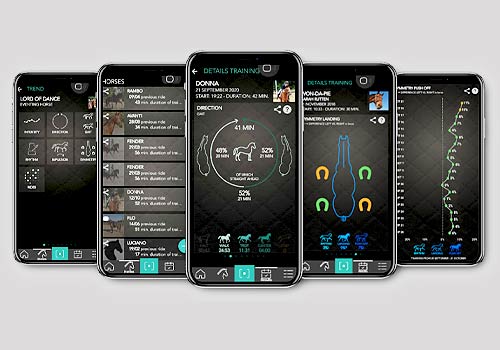
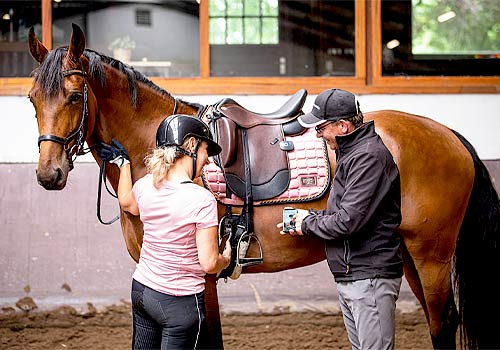
Thank you. I’m Leon Rutten, founder and CEO of Equestic. Our mission is simple: to help riders and coaches perform with care. Equestic sits at the intersection of equestrian sport, data, and AI. Over the past seven years, we’ve built one of the world’s most advanced equine motion datasets through our EQ Saddle-Clip, used by riders and coaches in more than 65 countries. Today, we are focused on the next evolution of equestrian coaching, combining human expertise, rider reflection, and objective horse data into one unified platform: EQ Coach-Copilot.
2 What motivated you to develop this submission / achievement, and how did it align with your personal or company goals?
The motivation came from a simple but persistent problem: riders forget most of what they hear during a lesson. As a result, the real training - the days between lessons - often lacks structure and clarity. That’s where performance plateaus, and sometimes where horse welfare is unintentionally compromised. EQ Coach-Copilot directly aligns with our mission by extending the coach’s presence beyond the lesson, ensuring continuity, better learning, and more thoughtful training decisions.
3 Can you walk us through the technological advancements, unique solutions or ideas behind your award-winning entry?
EQ Coach-Copilot is the first platform that brings together three critical components of equestrian training: the coach’s expertise (captured via real-time audio recording), the rider’s reflection, and objective horse motion data from the EQ Saddle-Clip. We’ve built AI that transforms raw coaching input into structured, searchable training summaries, effectively turning each lesson into a reusable training asset. Combined with a dataset built from hundreds of thousands of rides, this creates a new layer of intelligence in coaching that has never existed before.
4 How did your expertise or leadership contribute to the success of this project?
My role has been to keep the focus on what truly matters: not replacing the coach, but amplifying their impact. We’ve stayed very close to riders, coaches, and veterinarians throughout development. That grounded approach, combining technical innovation with real-world application, has been key to building something that people actually use daily.
5 What specific problem does your innovation solve, and how does it improve existing processes?
It solves the “space between lessons.” Traditionally, coaching is fragmented, a rider receives instructions, but retention is low, and there’s limited visibility for the coach afterward. We turn each lesson into a structured, persistent record that riders can revisit and apply between sessions. This improves learning efficiency, reduces repetition, and enables more intentional, welfare-focused training.
6 Can you describe the key features or aspects that make your innovation stand out?
There are three key differentiators: 1. Structured lesson intelligence: automatic transcription and smart summaries. 2. Unified training ecosystem: combining human input with objective horse data. 3. Human-centered design: built to support, not replace, the coach. It’s also incredibly simple: one device, one app, no technical barrier, which is critical for adoption in a traditional sport.
7 What role did your company or team play in helping you bring this idea to life?
This is very much a team achievement. Our engineers, data scientists, and equestrian experts worked closely together, but equally important, we co-created this with our users. Coaches and riders continuously tested and shaped the product. That collaboration ensured we built something practical, not just innovative.
8 What challenges did you face during the development phase, and how did your personal skills help overcome them?
One of the biggest challenges was bridging two worlds: advanced AI technology and a deeply traditional sport. It required patience, clear communication, and a strong belief that innovation must respect the craft. We focused on simplicity and trust, making sure the technology feels natural in the training process.
9 What impact do you hope your innovation will have on its industry or audience?
We want to fundamentally change how people learn in equestrian sport. Our goal is that riders feel supported even when they train alone, coaches can scale their expertise, and horses benefit from more consistent, data-informed decisions. Ultimately, it’s about better performance, and better welfare.
10 How does winning this award reflect your vision for technological progress or innovation?
It validates our belief that the future of sport is not about replacing human expertise, but augmenting it. Innovation should make knowledge more accessible, more structured, and more actionable, without losing the human element that defines performance.
11 What challenges did you face during the development process, and how did you overcome them?
Beyond technology, adoption is always the real challenge. We addressed this by focusing on immediate value, making sure that from the very first use, a coach or rider sees the benefit. That’s what drives long-term change.
12 How do you see your innovation impacting the future of your industry?
We believe coaching will become more continuous, data-supported, and globally accessible. The traditional model of isolated lessons will evolve into a connected training journey, where every session builds on the previous one, and insights are never lost.
13 What trends or emerging technologies excite you the most right now, and how do they influence your work?
AI in learning and decision-making is incredibly exciting, especially when combined with real-world data. But what excites me most is the shift toward human-centered AI: technology that enhances expertise rather than replaces it. That’s exactly the direction we are building toward.
14 What advice would you give to individuals or teams working on transformative ideas?
Start with a real problem, one that people genuinely struggle with. Stay close to your users, simplify relentlessly, and don’t be afraid to challenge existing workflows. And most importantly, build something that people will actually use, not just something that looks impressive on paper.